Ads converting. VSL signing clients.
Sales calls closing with conviction.
A YEAR AND A HALF LATER,
MORE POWERFUL THAN EVER.
↓ Click the image below to watch the full case study video
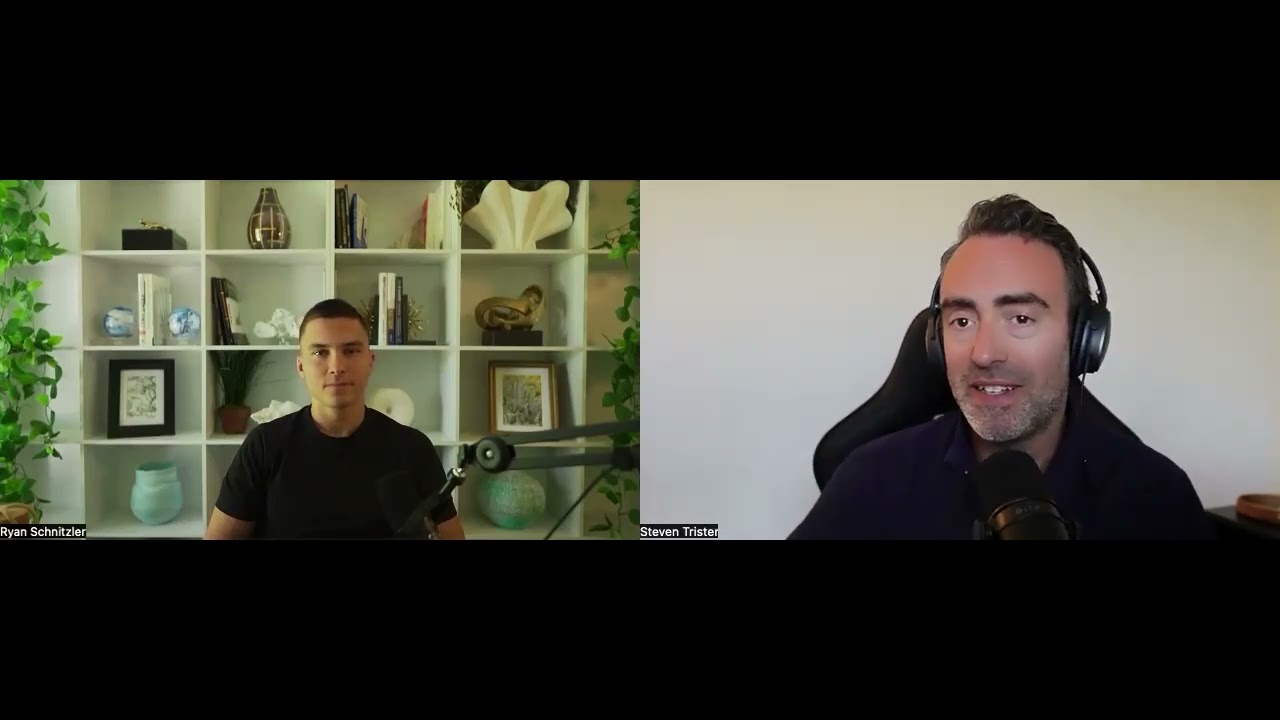
How Ryan Schnitzler, founder of The Growth Center, used speaking skills coaching to transform his on-camera presence — signing clients from ads and his VSL, and closing more on sales calls — with results that keep compounding.
He knew the words on the page.
He needed them to land on screen.
Ryan Schnitzler runs The Growth Center, an SEO agency. He understood copywriting, psychology, and how to communicate in written form — emails, LinkedIn content, sales copy. The frameworks were there. The knowledge was there.
What he was honest enough with himself to acknowledge was that none of that transferred automatically to camera. When he started building out his advertising strategy and trying to crack video ads and a VSL, the gap became obvious. He wasn't confident. He didn't know how to look into the lens, control his tonality, or deliver a sentence with the weight it deserved.
He knew what he needed to do. He went and found someone to help him do it.
Good in writing. Different story on camera.
Ryan had the fundamentals of communication nailed in text. He understood what made copy convert. But the moment a camera was involved, everything he knew became harder to execute. The confidence wasn't there. The awareness wasn't there. And in an ad or a VSL, that shows.
Before the coaching
Not confident speaking on camera. Unaware of the fundamentals — eye contact, tonality, delivery. Subconsciously avoiding filming. Strong in written communication but unable to transfer it to video.
What that costs you
Ads that don't convert. A VSL that doesn't pre-sell. Sales calls where the conviction doesn't come across. Revenue left on the table because the message doesn't land the way it should.
The insight: Knowing how to write copy is not the same skill as being able to deliver it on camera. The psychology is the same — but the performance is different. That gap is exactly where speaking coaching earns its place.
I wasn't very confident speaking on camera. I didn't know how to look into the camera — I was just completely unaware of the details. All I knew was that I needed help.
Coached live. On camera. No fluff. No pussyfooting around.
Ryan describes the process as direct, uncomfortable at points, and exactly what he needed. Real-time feedback on live recordings. No wasted time on what he wanted to hear. Just what was wrong, how to fix it, and instructions to go implement.
Honest assessment — starting with awareness
Ryan had no idea what he was doing wrong on camera because he'd never had anyone show him. The first job was to identify the specific issues: eye contact, tonality, delivery cadence, sentence control. Once he could see what wasn't working, he could start fixing it.
Live on-camera coaching — the uncomfortable part
Sessions were live. Ryan speaking to camera, feedback in real time, doing it again until the delivery shifted. That discomfort — being told directly what isn't working and having to repeat it in front of someone — is exactly where the improvement happens. Ryan leaned into it.
Direct, no-fluff feedback
Ryan's biggest positive about the process: total directness. No softening. No telling him what he wanted to hear. When something wasn't working, he heard what it was and what to do differently. That directness is how rapid progress gets made — and Ryan knew it.
Implementation between sessions — the reps
Every session ended with a clear brief: go implement. Ryan went away, recorded, applied what he'd been taught, and came back with the reps in. Over time, those reps compounded. What felt uncomfortable became natural. What felt forced became automatic.
It was very direct. We got on the calls, made the most of them, and I went and implemented after. No fluff. No wasted time. That directness is how you make rapid progress.
Clients signed. Revenue up. And still compounding eighteen months later.
Ryan didn't just get better on camera in the abstract. The improvement showed up in the numbers. Ads performing better. A VSL that started signing clients. Sales calls where his conviction was closing business that might have slipped through before. And a year and a half on, the foundation built in coaching continues to pay out.
Clients
Signed directly from ads and his VSL post-coaching. Ryan credits his improved on-camera delivery as a direct factor in those conversions.
Revenue
Tangible bottom-line impact. As his delivery improved, his ads became more and more profitable over time — a clear link between speaking skill and business results.
Higher
Close rate on sales calls. Greater conviction and clarity in one-to-one conversations translated directly into more clients signed.
Enjoyment
Something he used to subconsciously avoid became something he genuinely looks forward to. That mindset shift compounds everything else.
18 mo.
After the coaching, the skills keep paying dividends. Every new ad, every VSL, every sales call — the foundation keeps compounding.
Every
Area of life improved — sales calls, video ads, public speaking, everyday communication. Ryan calls it the foundation of everything.
It has a tangible impact on the revenue. The confidence increase is huge — and to have it increase the bottom line as well is very, very cool.
It was never just about the ads. Or the VSL. Or the sales calls.
Ryan says something near the end of the conversation worth sitting with. Yes, there were clients signed. Yes, the ads performed better. Yes, the revenue went up. But some of the most meaningful shifts don't show up in a spreadsheet.
The confidence to look a stranger in the eye and hold a conversation. The ability to speak in a room of people you don't know and feel entitled to be heard. The enjoyment of something that used to be avoided. These are skills that compound quietly, every day, in every direction — and eighteen months after the coaching ended, Ryan says they're more important than ever.
His message to any business owner on the fence: if you're not able to speak with conviction about what you've built, you are doing your prospects a disservice. They could benefit from what you do. You owe it to them — and to your business — to be able to get that across.
To the business owner sitting on the fence.
Ryan's recommendation to anyone considering investing in their speaking skills was unequivocal. He laid out why:
Solve the immediate problem — and then some
Whether it's your ads, your VSL, YouTube content, or sales calls — investing in your on-camera presence will improve the specific outcome you're looking for. That alone justifies the investment. But it's a fraction of what you actually get back.
The benefits you can't see yet
Ryan's biggest point: you don't see all the other returns from improving your speaking skills until you're inside them. Every area of your life — sales, communication, confidence, how you show up in rooms — gets better. It's a genuinely compounding skill.
Commit fully and trust the process
The discomfort is where the progress lives. Being told directly what isn't working, doing it again, going through the uncomfortable sessions — that's the mechanism. The people who get the results are the ones who go all in on the process and do the reps between sessions.
It's pretty much a no brainer. Make the investment, commit to it — and then see where you end up. It affects every area of your life.
If you're ready to speak with genuine conviction — and see it show up in your revenue...
That's exactly who I work with.